


The Japan International Cooperation Agency has established 20 global agendas to promote collaboration and co-creation with stakeholders both in Japan and abroad. Among these, JICA’s Sport and Development agenda aims to promote and strengthen sports programs while fostering human connections, social inclusion and peace through sports. JICA volunteers play a leading role in this effort.
Since 1965, over 5,000 volunteers from various sports have been dispatched to 90 countries around the world. Their activities have yielded significant results, including the spread of Japanese-style school athletic festivals, or undokai, which foster cooperation and sportsmanship and help students discover the joys of physical education and exercise.
There are also volunteers who focus on training athletes and supporting their participation in international competitions.
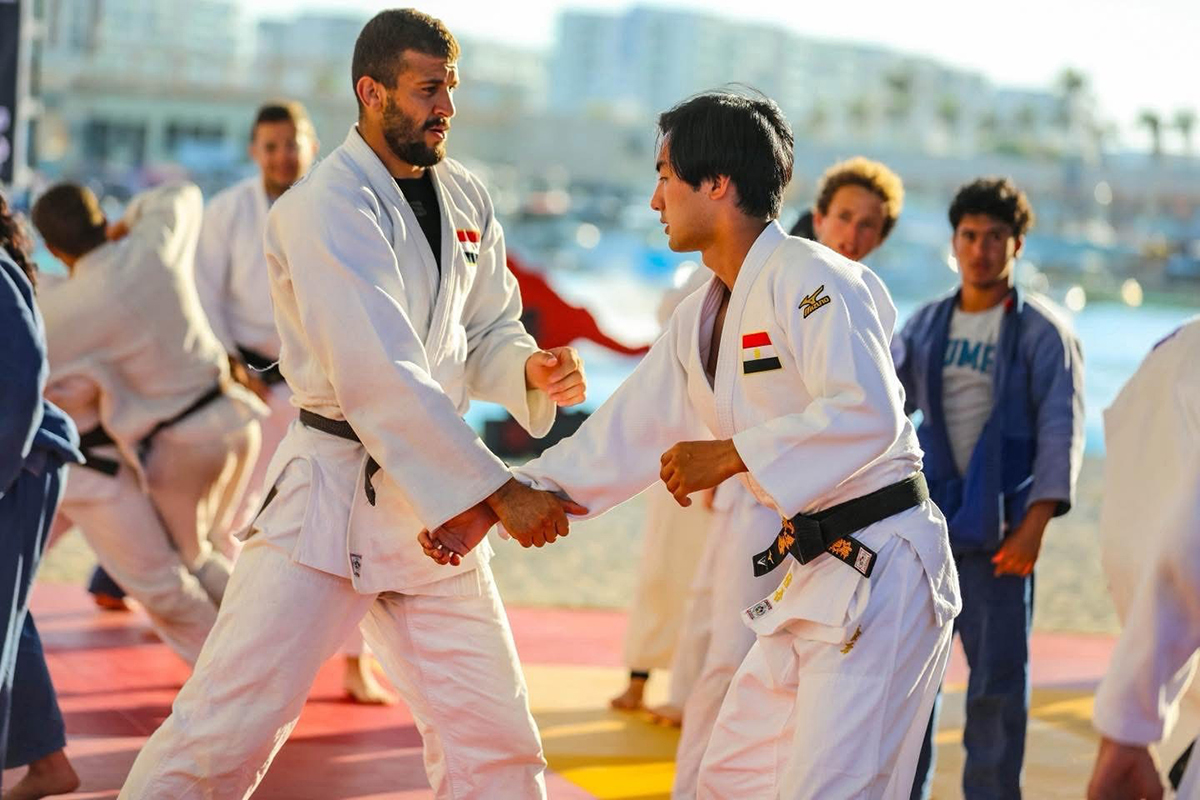
Yugo Kadota is one such volunteer. A graduate of Tenri University in Nara Prefecture, Kadota was dispatched to Egypt as a judo instructor for two years, starting in 2023.
Kadota’s journey was made possible through a collaboration between JICA, the city of Tenri and Tenri University, which is renowned for its judo team. The connection between Egypt and Tenri was established by Tenri Mayor Ken Namikawa, who had previously served as second secretary at the Japanese Embassy in Egypt. He received a request from Egypt for a Japanese judo instructor, which led to this collaboration.
Takamasa Anai, the head coach of Tenri University’s judo team and a former Olympian, selected Kadota, who was then in his senior year at the university, as the most suitable candidate to dispatch to Egypt.
Kadota started judo at the age of three, influenced by his parents and older brother, who were also judoka. While attending Tenri University, he joined the judo club and developed a deep interest in languages and international exchange after interacting with foreign students there.
Anai valued Kadota’s proactive attitude in engaging with people from different linguistic and cultural backgrounds. Anai recalled Kadota as “extremely earnest and dedicated to everything he did.”
Kadota accepted the offer to go to Egypt without hesitation. After graduating from university, he immediately underwent JICA’s training to prepare for his life abroad.
Upon Kadota’s departure, Anai gave him stern encouragement, “Always be aware that you are representing Tenri University and give it your all as if you are setting off fireworks in your own life.”
Feeling the weight of this responsibility, Kadota went to Egypt with a sense of resolve. His activities there extended far beyond just teaching judo — he did everything from creating training programs to managing athletes’ physical conditions, making every day full of new challenges.
“Almost every month, or at least every two months, our athletes competed in international tournaments. Especially last year, before the Olympics, there was this constant tension that every tournament was a steppingstone leading up to the Olympics,” Kadota said. “We needed to carefully consider and manage the athletes’ conditions to prevent injuries while creating effective training programs.”
In addition, Kadota faced significant hurdles not just with the language barrier, but also with cultural differences. “Since Egypt is an Islamic country, prayers took priority over practice. It was not unusual for people to arrive late to training sessions because of prayer times. I was confused by these things at first,” he said.
He also noted a major difference in judo training methods between Japan and Egypt. “The Egyptian athletes seemed focused solely on winning and interested only in throwing techniques. So, I made it a priority to thoroughly teach them the fundamental movements,” he said.
At first, the athletes seemed bored with the drills that Kadota made them repeat, but as they started to see the results of practicing the basics, they began to take them seriously. Kadota explained that mastering the fundamentals allows a judoka to throw not just by using their own body size and strength, but by leveraging their opponent’s power. He said that the athletes themselves should gradually feel the difference in the sensation of their throws.
The team representing Egypt won both the overall individual title and the team championship in last year’s African Senior Championships held in Egypt. Kadota said that the gratitude expressed by the athletes brought him immense joy.
During Kadota’s stay in Egypt, Tenri University also dispatched eight short-term student volunteers.
To recruit volunteers, Anai encouraged members of the university’s judo team to “take this learning opportunity to enhance their own experience.”
When the student volunteers arrived in Egypt, Kadota was there to welcome them and help them get settled in. He observed how they quickly bonded with the Egyptian athletes through judo, despite the language barrier. This experience reaffirmed his belief in the power of sports. He also noted that the proactive communication from the Egyptian athletes and their open-mindedness was a significant help to the Japanese students.
Anai said: “The students told me that they had been bombarded with questions about judo from the Egyptian athletes and that answering those questions became a learning experience for them. I was happy to see the students’ personal growth.”
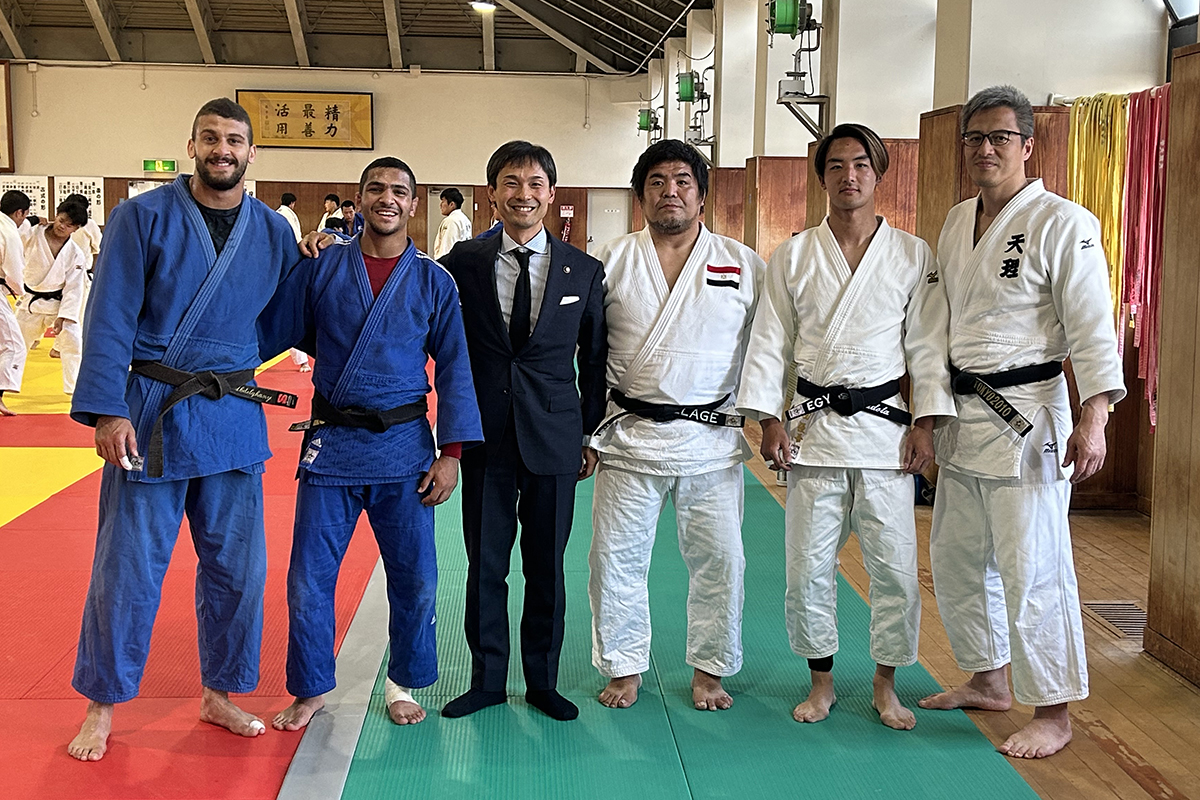
He feels that a new culture has been fostered within the judo club where students have deeper interest in foreign languages and cultures and actively seek to interact with athletes from other countries.
Upon returning to Japan, the student volunteers shared their experiences in Egypt with the club and university, and they have even visited local elementary schools to teach children about understanding different cultures.
Kadota, who has just returned from Egypt, spoke about his future, stating: “I want to continue teaching judo in different countries and bring the athletes I coach abroad to matches and training camps held in Japan. That way, I believe I can show university students and young athletes in Japan that there are also opportunities for them to use their skills and abilities outside Japan.”
JICA’s volunteer program under the Sport and Development agenda has had a profound influence on Kadota and the short-term volunteers. This experience confirmed for Anai that sports can overcome language barriers, and that it is crucial for athletes to step forward with courage into international cooperation.
Kadota also expressed his hope that more Japanese martial artists, including judoka, will be inspired to become JICA volunteers and nurture athletes abroad. He believes that these disciplines offer more than technical skills — they provide greater insights into humanist values.
The partnership between JICA, Tenri City, Tenri University and Egypt is expected to continue, as will JICA’s volunteer activities in pursuit of the Sport and Development agenda in other countries.

