


It is sobering. Looking east from the rooftop of the Futaba Business Incubation and Community Center at the expanse of ocean on the horizon, forested hills to the southeast and northwest and the flat plain stretching ahead, it is a struggle to imagine what once was. Roads still run through empty fields, and the realization hits that many of those fields were once covered with houses and businesses — now gone.
Futaba was the last municipality in Fukushima Prefecture to be reopened to residents after the natural and nuclear disasters of 2011. The town’s coastal districts were swept away by the tsunami, and even undamaged buildings around the station were left abandoned after the nuclear disaster forced residents into a long-term evacuation. Some 7,000 people once lived in the town; now, that number is less than 200.
However, Futaba native Isuke Takakura, who is approaching his 70s, says that while the homes may be gone, the feelings of the people who lived in them remain. The section of the Fukushima Coastal Trail, an extension of the Michinoku Coastal Trail, that wends through Futaba was chosen with that in mind. On it, visitors can remember Futaba’s past, but also see how a path to the town’s future is being opened.
“We want people to think about what the town was like before and at the time of the disasters, (but also) see that recovery is underway,” Takakura said. “The footpath goes through an area that was not only hit by the earthquake, but also by the tsunami. It is not just starting back from zero — it is starting back from ‘minus zero’ … and now conditions are getting to the point where you can actually live here again.”
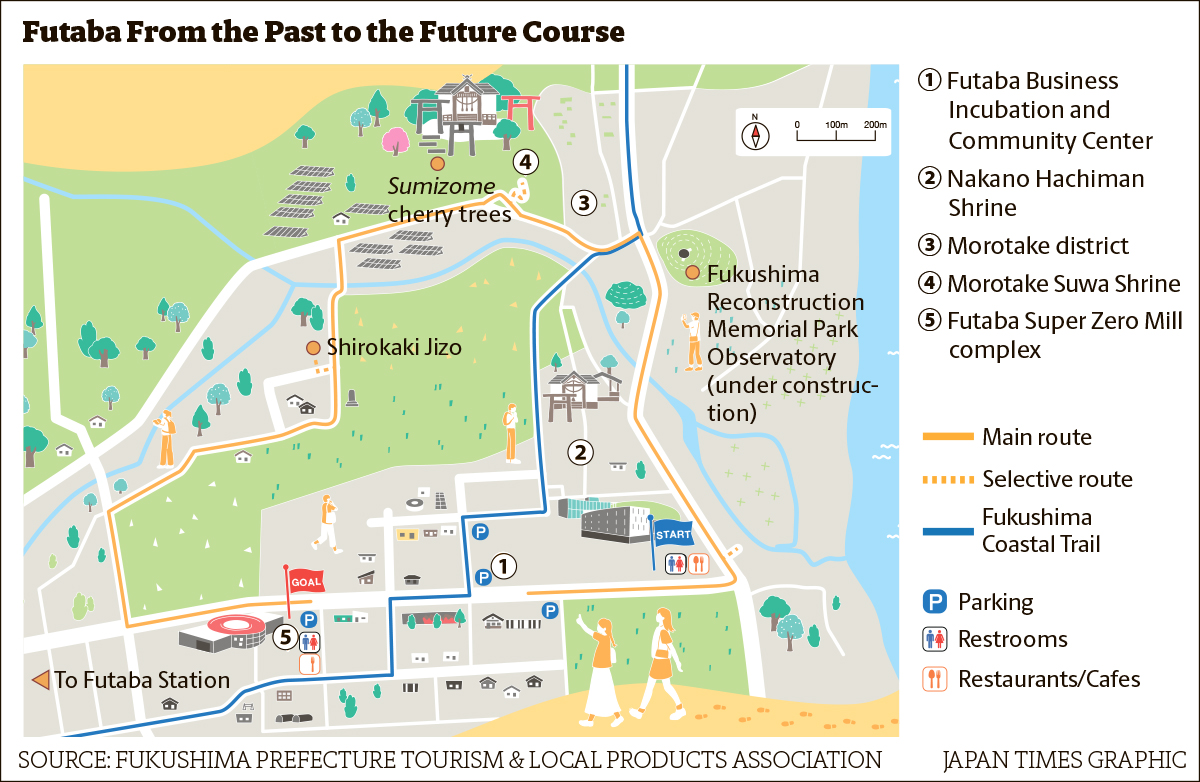
The 4.2-kilometer-long Futaba “From the Past to the Future” Course starts at the community center. The F-BICC has rooms for conferences and meetings, as well an observation deck and a convenience store. Neighboring the facility are a museum commemorating the triple calamities and the construction site for a hotel slated to open in summer 2026.
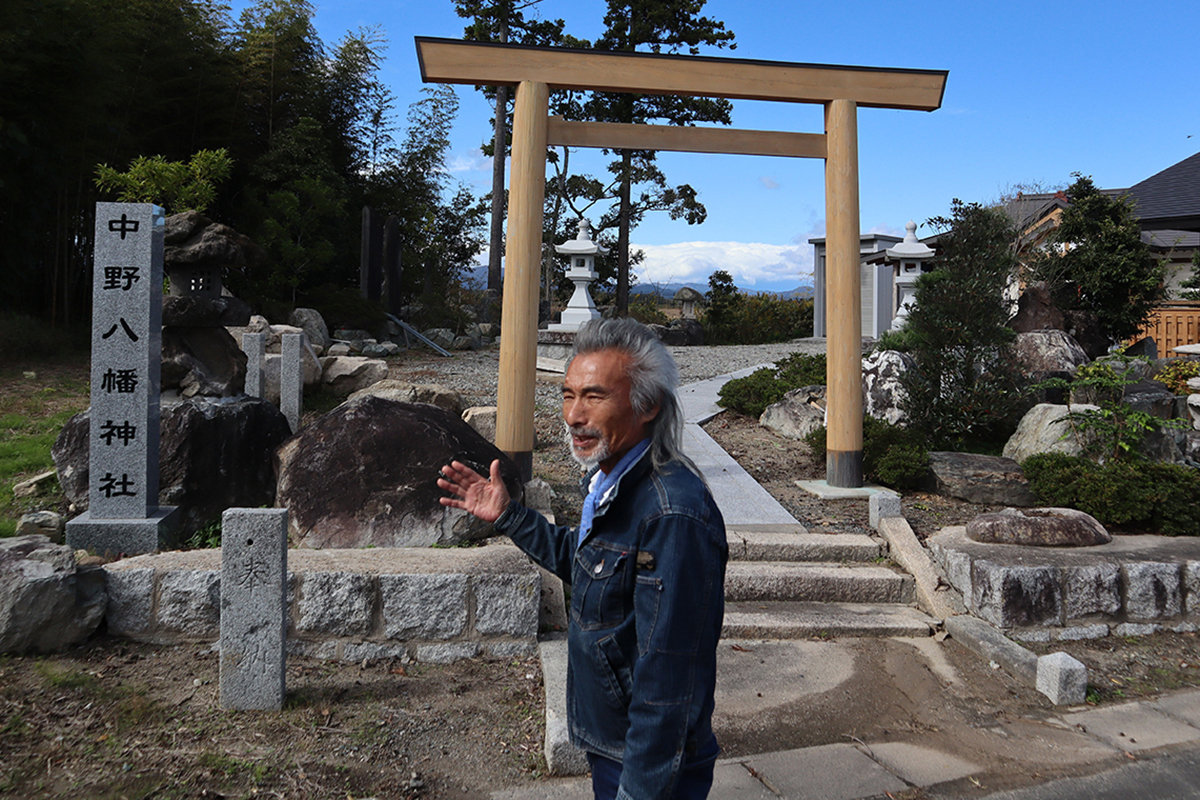
Visitors can head east toward the seaside to reach the Fukushima Coastal Trail that runs through the prefecture, or turn north to arrive at Nakano Hachiman Shrine. Rebuilt in 2021 using materials donated by other sites, including the Grand Shrines of Ise, Nakano Hachiman embodies, in Takakura’s words, the feelings of people like himself who grew up in its vicinity.
To the east, the prefecture is planting a forest of flowering trees, while to the northeast, the central government is building the Fukushima Reconstruction Memorial Park Observatory with a 20-meter-high observation deck.
The footpath leads northwest to its next stop, Morotake Suwa Shrine. Rebuilt in 2019, the shrine sits atop a 30-meter rise that affords a view of the ocean and of the plain upon which the town of Futaba sits. Nearly 50 people lasted out the tsunami there, a fact commemorated by a memorial tablet at the site. The hilly Morotake district also hides an ancient tomb, and the forest covering the area is dotted with sumizome cherry trees.
A slight jog to the southwest leads past the Shirokaki Jizo — three small statues of the bodhisattva Jizo, who is celebrated as a protector of rice farming — and turns east to end at the Futaba Super Zero Mill, which produces beautiful yarn. New construction can be seen here and there along the way, and on paddy land near the mill the first efforts to grow rice again have begun.
The road ahead may be long, but the progress toward recovery is worth celebrating.
For more information about traveling to Fukushima, please visit

