


Nomura Research Institute Ltd.
Eri Yokoishi
System engineer
Originally from Nagasaki Prefecture. Graduated from university in Kumamoto and worked in a tech company before joining NRI in 2018. Currently in NRI Europe’s Denmark branch in Copenhagen as part of a training program.
When Eri Yokoishi was studying at Kumamoto University, she was a marketing and media major. As an undergrad, she devoted her time to studying cases on corporate marketing and how it leads to business opportunities. She didn’t really plan for a career in IT, but as she learned about multifaceted problem-solving and effective client communication, she began to consider the possibilities and potential of IT as a way of implementing those issues.
Upon graduation, she decided to deploy the skills and knowledge acquired in her years at university by joining a tech company. “I had no prior knowledge of systems technology, nor did I have any engineering skills,” said Yokoishi. But through her peers in the workplace, she quickly learned the ropes of industrial systems architecture and its enhancement.
Seeking more opportunities
And then in 2018, Yokoishi switched tracks by leaving the company and joining the DX (digital transformation) department at the Nomura Research Institute (NRI) in Fukuoka. What triggered the shift from marketing to tech, and then to corporate digital transformation and financial technology? “I think it’s because I was looking to gain experience in a wider range of business. The work at the Nomura Research Institute is demanding, but at the same time it’s very rewarding and stimulating.”
At the time of the online interview, Yokoishi was in her fourth month of living and working in Copenhagen, Denmark, as part of the Nomura Research Institute’s in-house trainee program. “My mission is to achieve a more balanced workplace for NRI’s IT engineers in Japan by making full use of NRI’s three overseas operations. Specifically, this means deploying these overseas operations to take on some of the workload of our Japan-side IT staff, who are working to maintain, enhance and troubleshoot operational systems and respond to client queries on a 24-7 basis.”
Yokoishi herself was pretty much on call 24 hours a day, 365 days a year. “Maintaining and operating NRI’s systems for our clients is crucial to the DX department,” she said. “It’s a matter of course for a client to demand that level of commitment. If I were a client, I would do the same. At the same time, I feel it’s good to transfer the bulk of systems maintenance and operations overseas. It’s work-sharing on a global scale, which is made possible because of the time differences between Japan and abroad. When we make this work, the burden on the Japan-side staff will be significantly decreased. I’m hoping that will happen.”
In 2023, before going on board the trainee program, Yokoishi worked on a project to enhance a securities system as a team leader of about 15 team members. “The work required immediacy in responding to urgent situations, gaining client trust and building a stable and robust operational system. Every task was critical to gaining client satisfaction and improving the system. When there was trouble, we were called upon to respond at all hours of the day and night.”
Looking back, Yokoishi says the experience made her stronger as a professional — not just mentally but in gaining skill, acumen and knowledge. “I also developed an app and cooperated with offshore companies on a big project. In hindsight, I think the experience gave me the wherewithal and confidence to put in my application for the trainee program. By learning to communicate with engineers from overseas, I also learned the joy of working as a team in a diverse environment, with everyone making a joint effort to achieve a specific goal.”
Working in a diverse environment
Once the project was up and running smoothly, Yokoishi applied for the trainee program, and passed with flying colors. Aside from the impact on her career, “I thought this could be the first and only time in my life that I could take off and go overseas long-term, on my own,” she said. “Before coming to Copenhagen, the idea of a global project didn’t cross my mind very often. But now I’ve learned that there’s more than one way of looking at a project and multiple ways to think about — and coordinate — it with a team. The program is only for one year, but now that I’ve made new discoveries, once I’m back in Japan I hope I will get a chance to work on a global project again.”
Yokoishi added: “Coming from Japan, I have noticed the vast differences in culture and language. Copenhagen is a completely different environment from anything in Japan — I feel it’s much more diverse and international. Every day is a learning experience for me, and it’s so enjoyable. Right now I’m studying both English and Danish while working on the job. Learning Danish is especially a struggle, but when I find myself actually communicating with my colleagues here in their language, I feel a surge of happiness.”
Fostering young global talent
Yokoishi said that back in Japan, she was not what you would call an “overseas-minded person.” The first time she went abroad was during university. But she was selected for the overseas trainee program for her vision and commitment.
A spokesperson for the Nomura Research Institute said: “We at NRI strive to foster employees who can work within and for the global business community. We felt that Yokoishi had a clear, concise strategy for utilizing the trainee program and was eager to learn the how-tos of globalizing the DX business department.”
The spokesperson added: “The DX department is mainly staffed by male employees, but Yokoishi had a high level of commitment to the work. We felt she would be an asset to the trainee program. When this mission is over, we are confident that she will use her experience to take our company to a higher level of global development.”
Finding consensus and balance
As Yokoishi continues to work in Copenhagen, she said, “I find that it’s difficult to strike a good balance between corporate governance and outsourcing. It’s hard to reach a consensus among the different departments and still follow all the rules and guidelines. But I strive to do just that. It’s imperative for me to search for the most viable and effective solutions in order to build a more robust network system that is operable and effective for our clients.”
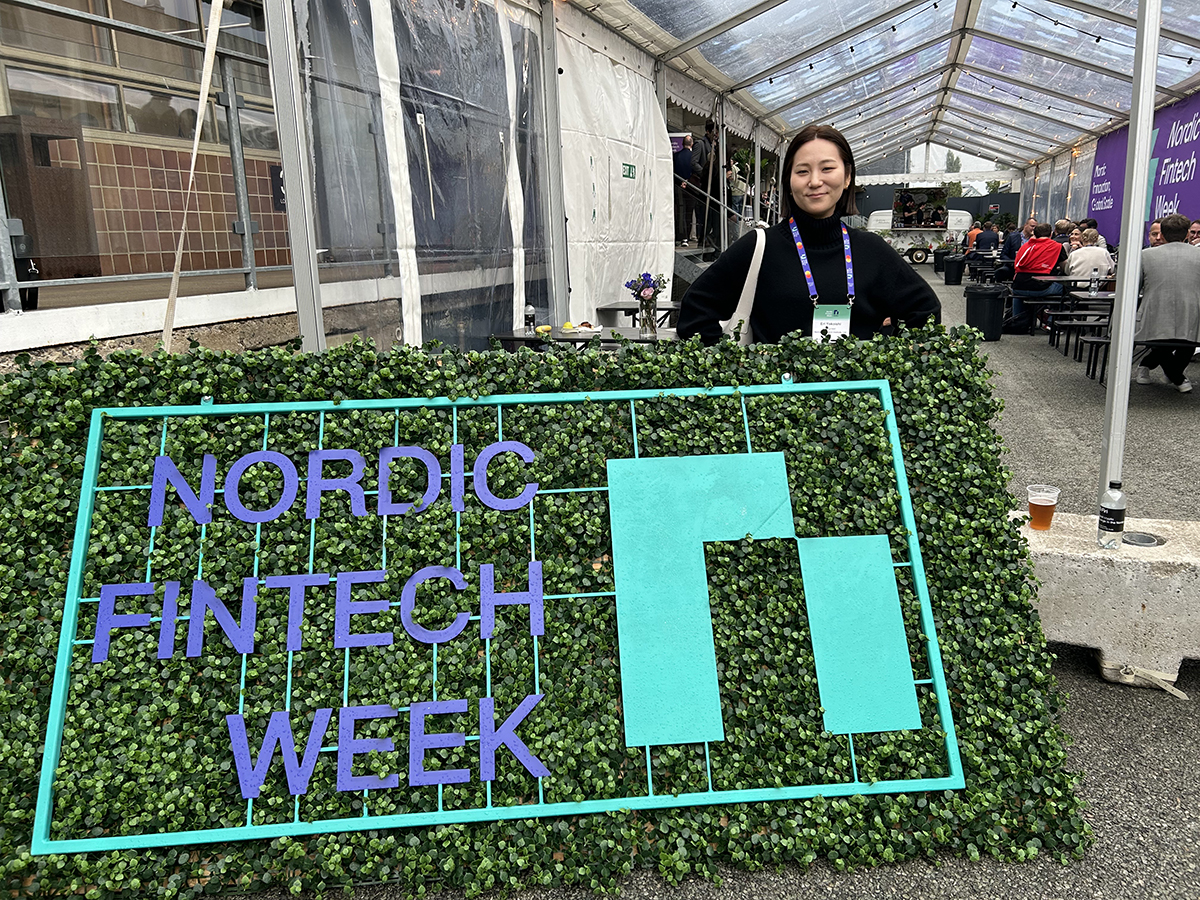
Working in Copenhagen has also provided Yokoishi with a new window on work cultures outside Japan. “I attended the Nordic Fintech Week, and it was an eye-opening experience,” she said. She recalled how she was struck by a credit card company that was working to increase security levels at no extra cost to their clients. “They were also introducing a system where the user can receive receipts for their purchases right on their smartphone screens. Every time they pay with a credit card, the data shows up on their smartphone screens and can be stored in a personal folder. This not only slashes paper waste, it enables the user to track their payments and protect their personal data. Everybody wins.” No trees are cut down either, which is a bonus.
“Back in Fukuoka, my life had been crammed to the gills with work commitments and I think I assumed it was the same everywhere. But here in Northern Europe, there are different ways to do business and to look at the finance industry. Companies are rated and evaluated for their work in sustaining the environment and achieving diversity, equality and inclusivity within the workplace. SDGs is a very big issue here. This vector of business is different from Japan, where companies are evaluated mainly for growth and profit.”
Learning to relax and unwind
Being exposed to a new working environment brought about a big change in Yokoishi’s own lifestyle. “I was used to working long hours, so I was completely surprised when I learned that in Copenhagen, some companies have a culture where people stop working at 5 p.m. On Fridays, people start eyeing the door by 4 p.m., and by 5, there’s practically no one left in the office. Everyone has plans for the weekend that they look forward to all week. Spending time with family and friends is precious, too. Personal lives are very important to the Danes and to Europeans in general, which was something quite new for me — an eye-opener for me.”
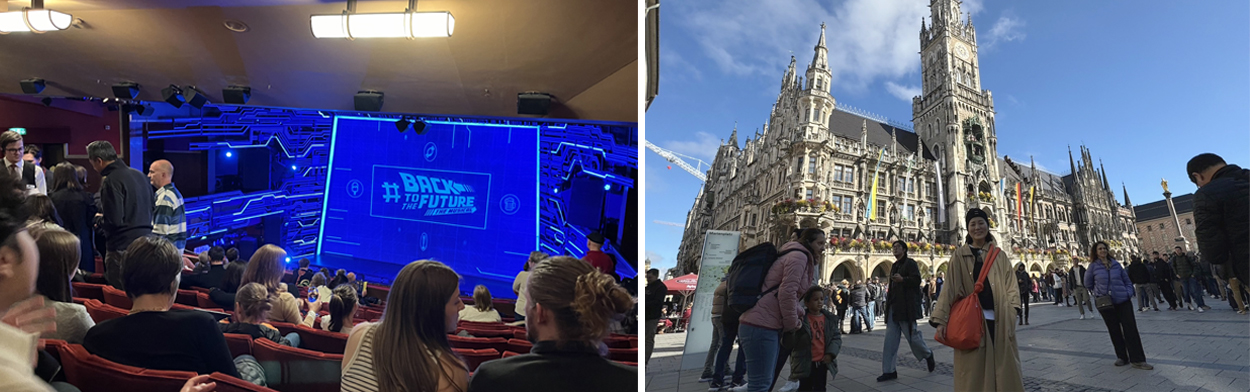
Because of this, Yokoishi added that she, too, has learned to relax and unwind. “You don’t have to show your passport to travel within the EU, and so I’ve taken little trips over the weekend.” Having ample down time is actually good for the workplace, said Yokoishi, since everyone returns to work on Monday fully refreshed.
As a nation, Japan may lag behind in that area, but Yokoishi feels that at the Nomura Research Institute, employees are treated as individuals — something that many Japanese companies struggle to do. “I never felt that I was being treated differently because I am a woman. I’ve never been told that I should leave early just because I’m a woman,’ ” she said.
The Nomura Research Institute spokesperson said, “We ensure that diversity and inclusivity are prioritized on every level. As for gender equality, NRI are doing well on this front. There are women engineers who are also mothers. There are women department managers and executives. Many men take paternity leaves. And we always value our foreign colleagues and partners.”
Nomura Research Institute (NRI)
The Nomura Research Institute creates new social values by providing integrated services ranging from consulting to IT solutions, addressing organizational and business transformation for clients, and tackling various societal issues.
NRI offers a unique business model by combining its “consulting function,” which guides clients from identifying challenges to formulating precise solutions, with its “IT solutions function,” which leverages advanced technology for system development and operations.
Address: Otemachi Financial City Grand Cube,
1-9-2 Otemachi, Chiyoda-ku, Tokyo 100-0004, Japan
URL:
Download the PDFs of this Diversity, Equity & Inclusion Special
熊本大学でマーケティングとメディア研究を専攻した横石江里さんは、マーケティング手法や公司のケーススタディを通して课题を多角的に分析する力や効果的なコミュニケーション力を身に着けた。业种にとらわれずにさまざまな分野の仕事ができそうだと滨罢业界の可能性を考えるようになり、卒业后は技术系公司に就职。产业システムの基盘构筑やエンハンスを担当していた。2018年に転职を决意し、野村総合研究所(狈搁滨)に入社した。仕事は求められるものも多いが、非常にやりがいがあると话す。
横石さんは現在、DX基盤事業本部 福岡ソリューション開発二部に所属し、社内の海外トレーニー制度を活用してNRIヨーロッパ?デンマーク支店に赴任中だ。インタビュー時、コペンハーゲンでの生活は4ヵ月目だった。「私のミッションは日本社員のエンゲージメント向上とグローバル3拠点を活用した24時間365日運用を実現することです。具体的には、所属元で24時間365日運用保守している国内ITシステムに関する保守?運用業務を海外拠点に移管することにより、『海外との時差を駆使したグローバルなワークシェアリング』、『国内システムにおける夜間対応の移管』を実現し、日本社員の負荷軽減を図れればと考えています」。
派遣前、横石さんは15人ほどのチームのリーダーとして証券システムのエンハンス业务を担当した。「即时性、安定性、信頼性、坚牢性が求められ」トラブル时は昼夜を问わず対応に追われることもあったが、この経験を通じて「技术面?知识面、そしてメンタル的にも大きく成长できた」と感じている。职场では性别は関係なく、一个人として尊重され、「やりたいことがあればやってみればいい」という文化があり、横石さんはアプリ开発にも携わることができた。「海外のオフショア公司と协力してプロジェクトを进めたことが、トレーニー制度に挑戦するきっかけにもなりました。海外のエンジニアと英语でコミュニケーションを取り、一つの目标に向かって活动する楽しさを知ることができたのは贵重な経験でした」。
キャリア面での挑戦はもちろん、「人生で初めて长期间海外に行くチャンス」と考えてトレーニー制度に応募し、见事选ばれた。狈搁滨が「明确なグローバル志向を持った社员であり、ミッション终了后も弊社のグローバル展开を担って活跃してもらえる」と期待を寄せる横石さんは多様性と国际性に富む今の职场でプロジェクトを多角的に见る视点やチームとのさまざまな调整の仕方を学んでいる。「ここで身に着けたグローバルな考え方を活かして帰国后はグローバルプロジェクトに関わりたい」と意欲的だ。英语とデンマーク语も勉强中で、特にデンマーク语の习得には苦労しているが、同僚とのコミュニケーションができたときには大きな喜びを感じていると言う。
日本とは异なる働き方を目の当たりにし、自身の働き方も変化していると言う。「いくつかの现地公司は、金曜日には午后4时には帰る準备を始める人が多く、クオリティー?オブ?ライフやワーク?ライフ?バランスを重视し、家族や友人との时间を大切にしています」。こうした働き方が职场全体にいい効果をもたらすことを実感している。


